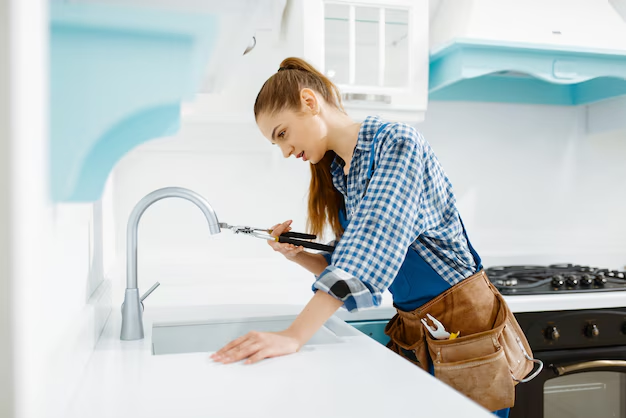
Plumbing Maintenance Tips Every Homeowner Should Know
Your home's plumbing works quietly in the background — until it doesn't. A small leak ignored for months can rot a subfloor. A slow drain can signal a much bigger blockage building downstream. The good news is that most plumbing problems don't appear without warning signs, and a modest amount of regular attention can prevent the kind of damage that leads to serious repair bills.
This guide covers the practical maintenance habits that keep residential plumbing systems in good shape, what warning signs to watch for, and when a situation moves beyond DIY territory.
Why Plumbing Maintenance Gets Neglected (And Why That's Costly)
Most homeowners think about plumbing only when something goes wrong. That's understandable — pipes are hidden behind walls and under floors, so there's nothing visible prompting regular attention.
But plumbing systems face constant stress: water pressure cycling on and off, mineral deposits building up over time, seals and washers gradually wearing out. Reactive maintenance — fixing things after they break — is almost always more expensive than preventive maintenance, which catches problems early or stops them from developing in the first place.
The other factor is water damage itself. Unlike an electrical fault, which may be contained, a plumbing failure can spread damage quickly across floors, ceilings, walls, and structural framing. Early detection matters enormously.
Monthly Habits Worth Building 🔍
These checks take only a few minutes but pay off consistently.
Check under sinks. Open the cabinet doors under kitchen and bathroom sinks and look for moisture, staining, or mineral deposits around supply lines and drain connections. Slow drips leave white or rust-colored rings — easy to spot if you're looking.
Test your water pressure. Water pressure that feels noticeably weaker or stronger than usual can signal developing issues. High pressure stresses pipe joints and appliance connections over time; low pressure may indicate a blockage, a partially closed valve, or a supply issue.
Run water in rarely used fixtures. Guest bathrooms, utility sinks, and basement drains with infrequently used fixtures can lose water from their traps — the curved pipe section that holds water to block sewer gases from entering the home. Running water through them occasionally keeps those traps filled.
Check visible pipes for condensation or moisture. In humid conditions, sweating pipes are common and usually harmless, but ongoing moisture accumulation can promote mold and corrosion over time.
Seasonal and Annual Maintenance Tasks
Some plumbing maintenance tasks are better scheduled on a longer cycle, tied to seasons or annual checkpoints.
Before Winter
Protect pipes from freezing. Pipes in unheated spaces — crawl spaces, garages, exterior walls, and attics — are vulnerable to freezing temperatures. Options include pipe insulation sleeves, keeping cabinet doors open to allow warm air circulation near exterior pipes, and knowing where your main shutoff valve is in case a pipe does freeze or burst.
Disconnect and drain outdoor hoses. Leaving hoses connected to outdoor spigots can trap water and allow freezing to work back into the supply line. Most modern outdoor faucets are frost-free, but disconnecting hoses is still good practice.
Test your sump pump. If you have one, pour water into the sump pit before the wet season to confirm the float trigger and pump are working correctly.
Spring and Summer
Inspect outdoor spigots and irrigation systems. After winter, check for cracks, drips, or damaged connections on exterior faucets and any irrigation lines.
Clear slow drains before they worsen. Spring is a natural time to clean out bathroom drains that may have accumulated hair and soap buildup over the winter months.
Drain Maintenance: What Actually Helps
Drain problems are among the most common plumbing complaints homeowners face. Most are preventable with a few consistent habits.
| What Helps | What Doesn't Help (or Causes Harm) |
|---|---|
| Drain strainers in tubs and showers | Pouring grease or oil down kitchen drains |
| Running hot water after greasy dishes | Relying heavily on chemical drain cleaners |
| Periodic cleaning with baking soda and hot water | Flushing wipes, cotton products, or paper towels |
| Professional hydro-jetting for recurring blockages | Ignoring slow drains until they fully block |
Chemical drain cleaners deserve a specific note. They can clear minor organic clogs, but used frequently, they can degrade older pipe materials and damage rubber seals. They also don't address physical blockages — toys, accumulated debris — or problems farther down the line. For a drain that repeatedly blocks, a professional camera inspection is often more useful than repeated chemical treatments.
Water Heater Maintenance ♨️
Water heaters are often the most overlooked appliance in a home's plumbing system. They work silently until they fail — sometimes with significant water damage if a tank ruptures.
Know the age of your water heater. Traditional tank water heaters have a typical lifespan in the range of eight to twelve years, though this varies based on water quality, usage, and maintenance. The manufacture date is usually printed on the unit label.
Check the anode rod periodically. The anode rod is a sacrificial metal rod inside the tank that attracts corrosive minerals, protecting the tank lining. Over time it degrades and needs replacement. Many homeowners are unaware this part exists. Inspecting and replacing it on a regular schedule — commonly every few years, though the interval varies by water quality — can significantly extend tank life.
Flush sediment from the tank annually. Mineral sediment accumulates at the bottom of tank water heaters, reducing efficiency and accelerating corrosion. Flushing the tank by briefly draining it through the drain valve is a relatively simple task but should be done with care — the water is hot, and some valves on older units haven't been used in years and may drip afterward.
Check the pressure relief valve. The temperature and pressure relief (TPR) valve is a safety device that releases water if pressure or temperature inside the tank gets too high. A quick test lift of the valve handle confirms it's not stuck. If it drips continuously after testing, it likely needs replacement.
Know Where Your Shutoffs Are
This is arguably the most important thing any homeowner can do — and it costs nothing.
Main shutoff valve: Know where it is and confirm it actually works. In many homes it's near the water meter, either at the street, in a utility room, or where the main line enters the house. If a pipe bursts or a supply line fails under an appliance, getting to that valve quickly limits damage dramatically.
Individual fixture shutoffs: Most toilets, sinks, and appliances have their own shutoff valves beneath or behind them. Periodically turn these valves off and back on to keep them from seizing — a shutoff valve that hasn't moved in a decade may not close fully when you actually need it.
Signs That Call for a Professional 🔧
Some maintenance is well within reach for a handy homeowner. Others genuinely require licensed expertise. The distinction isn't always obvious, but a few signals are clear:
- Water pressure that drops suddenly or fluctuates significantly — can indicate supply line issues or pressure regulator failure
- Sewage odors anywhere inside the home — may indicate a dry trap, but could signal venting or sewer line problems
- Discolored water — rust-colored or brown water from faucets may point to pipe corrosion, water heater issues, or supply line problems
- A water meter that runs when all fixtures are off — a reliable indicator of a hidden leak somewhere in the system
- Repeated drain blockages in the same location — often signals a problem deeper in the drain line than basic clearing can reach
None of these are automatic emergencies, but all of them are worth investigating rather than watching. A licensed plumber can diagnose what's happening in ways that a visual check simply can't — particularly for anything inside walls, underground, or involving the main drain line.
What Shapes How Much Maintenance Your System Needs
No two homes have identical plumbing situations. Several factors determine how much attention a system actually needs:
- Age and pipe material. Older homes may have galvanized steel, cast iron, or polybutylene pipes, each with distinct maintenance considerations and typical lifespans. Newer copper, PEX, or CPVC systems generally require less intervention.
- Water quality. Hard water — water high in dissolved minerals — accelerates scale buildup in pipes, water heaters, and fixtures. Homes with hard water often benefit from more frequent water heater flushing and may see shorter appliance lifespans.
- Usage patterns. A home with multiple daily users puts more demand on drains, water heaters, and fixtures than a household of one or two.
- Climate. Freeze risk, humidity levels, and seasonal temperature swings all affect how much seasonal preparation makes sense.
Understanding these variables helps you prioritize where to focus attention rather than treating every maintenance checklist item with equal urgency.